Dell Technologies, 2023 → 2025
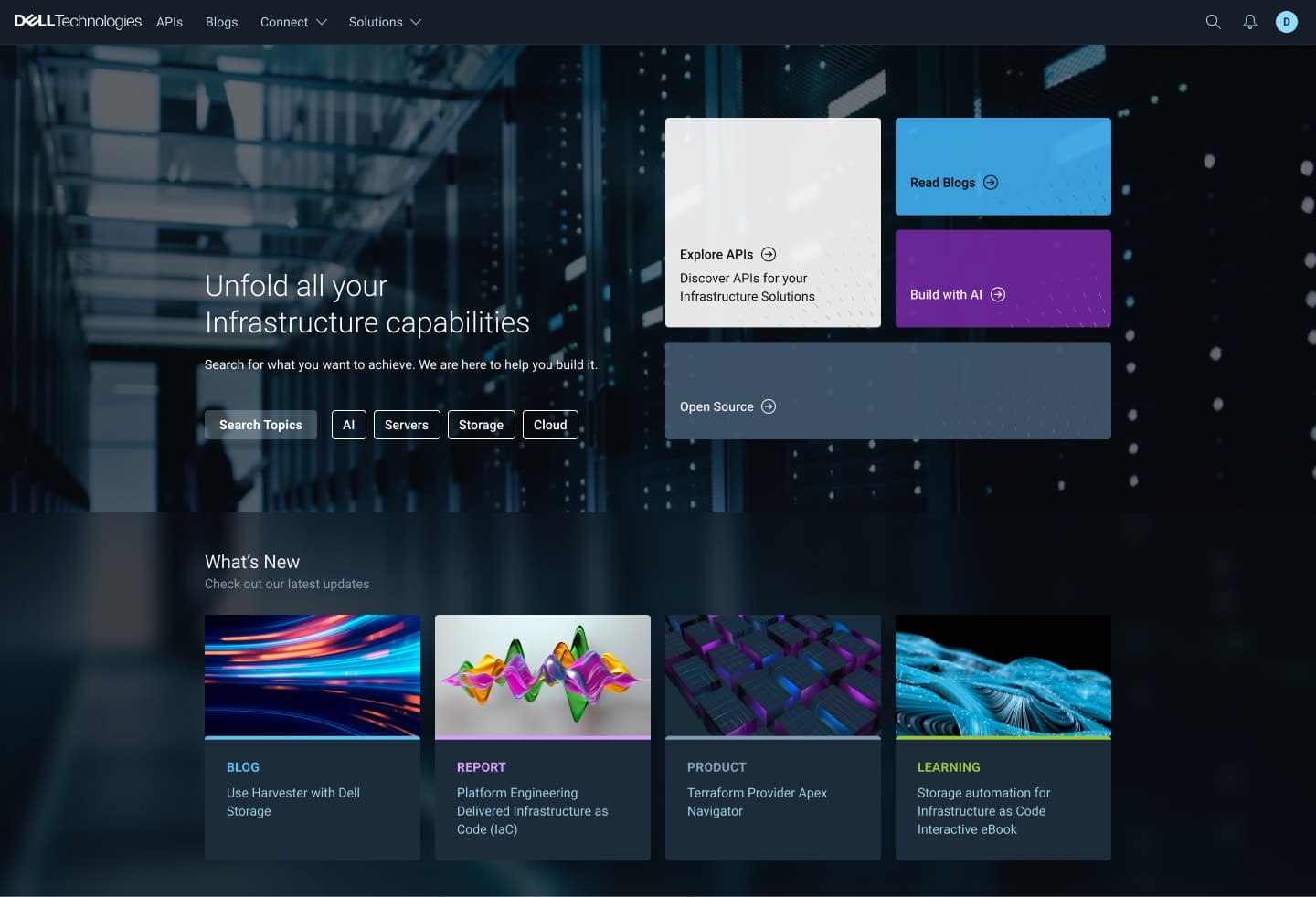
A single self-service platform for API docs, automation guides and code examples.
- Role
- Senior Product Designer
- Sector
- IT industry / Gen AI
- Timeline
- Dec 2022 - Dec 2025
- Platform
- Web
The decision that mattered most
Developers could not find reliable technical content because it lived across several portals with no shared structure. I led the information architecture and the design system adoption that turned a static content repository into one self-service hub. Unique users grew 11% in a year, with a peak of 8,000 daily visits.
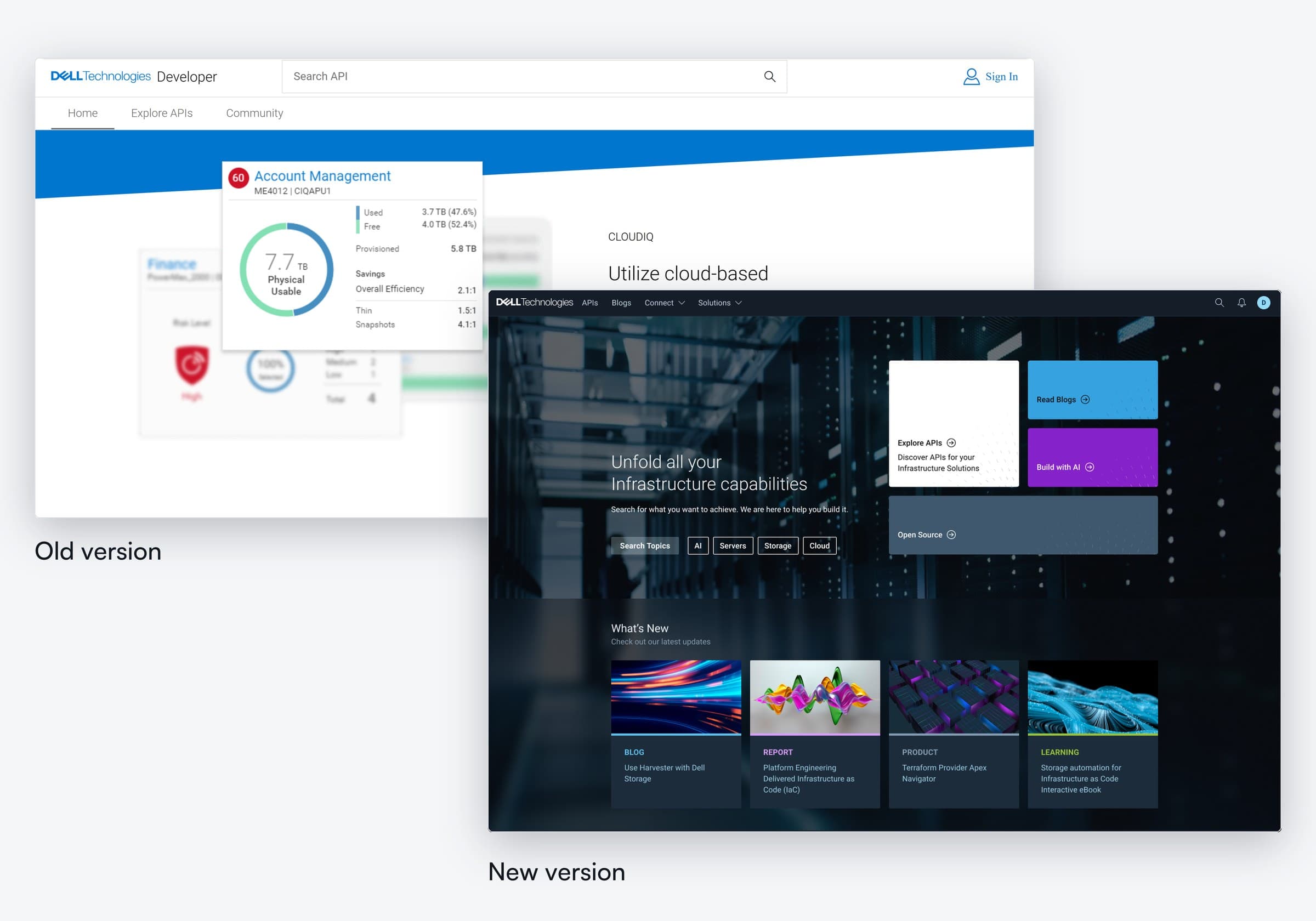
Developers, solution architects and IT professionals depend on accurate documentation to automate and integrate Dell infrastructure. After the MVP, the data said they were not finding it.
- Technical content was scattered across multiple sites and portals.
- No shared information architecture, so the same topic appeared in three places.
- Inconsistent interface patterns undermined trust in the content itself.
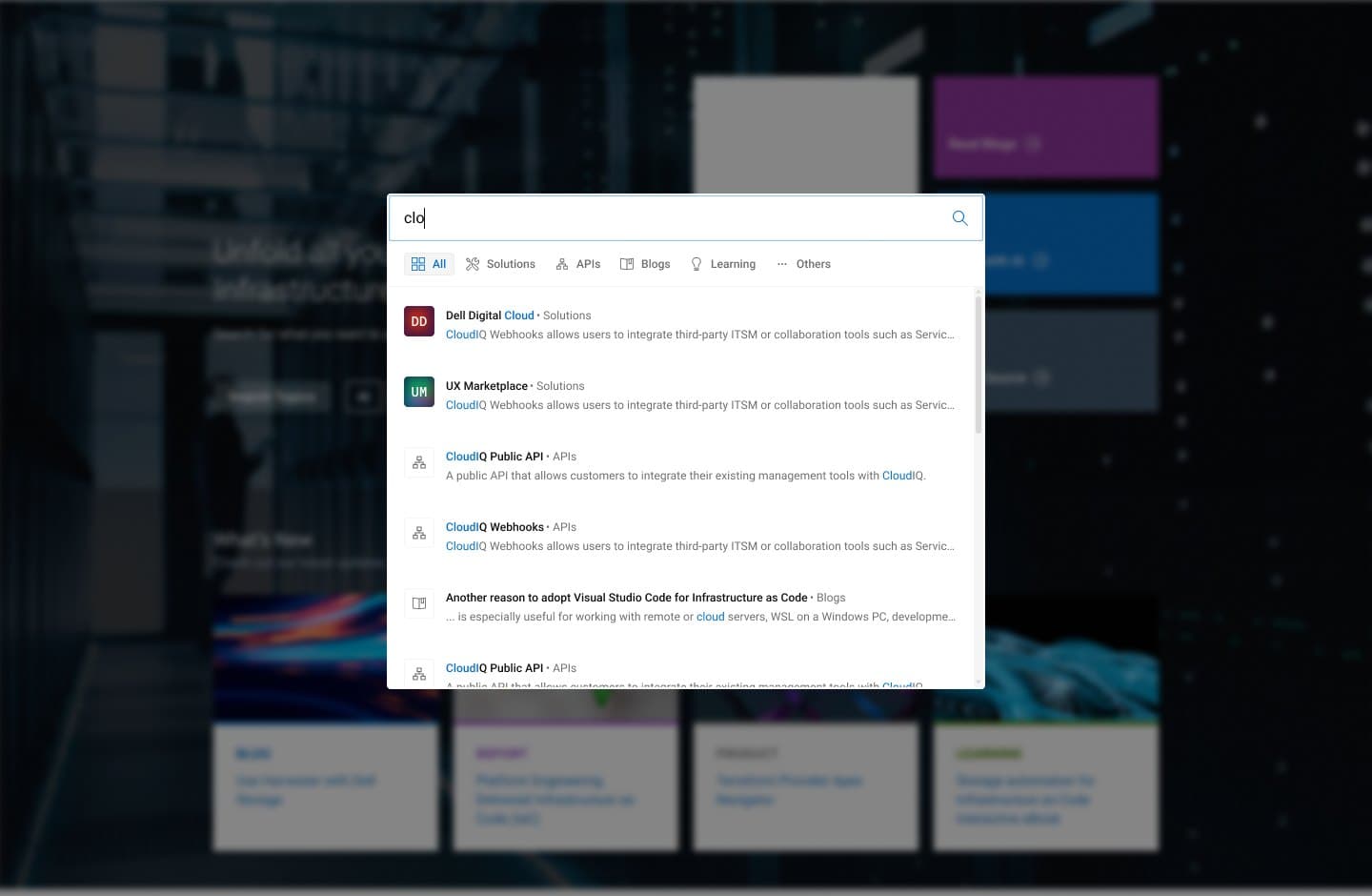
- Search returned mixed content types with no way to narrow them down.
01
Make the content findable
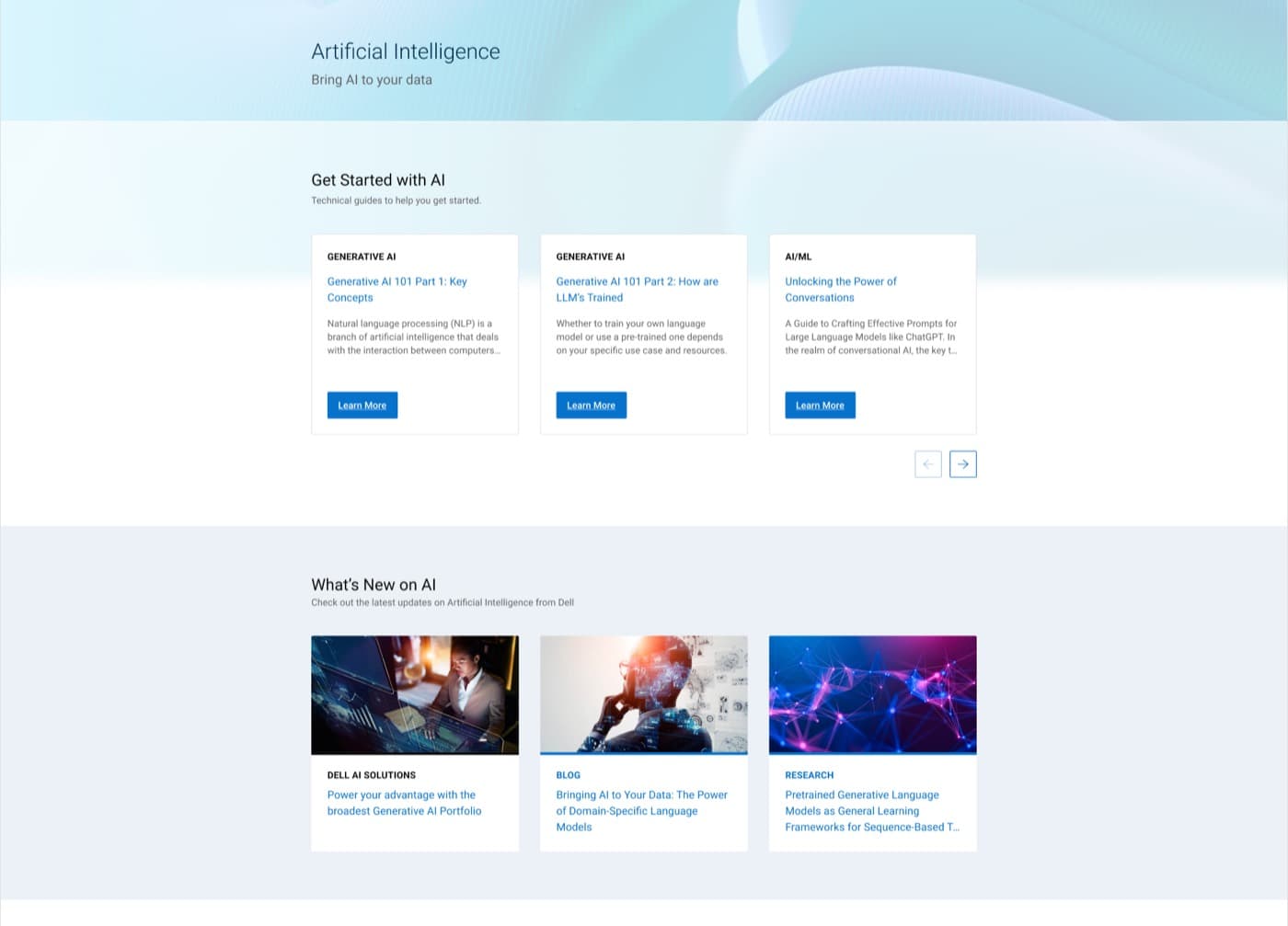
One architecture for APIs, guides and code examples, with search that narrows by type.
02
Make the platform credible
A consistent, standardised interface so the documentation reads as maintained.
03
Make it self-service
Developers reach the first working call without asking anyone for help.
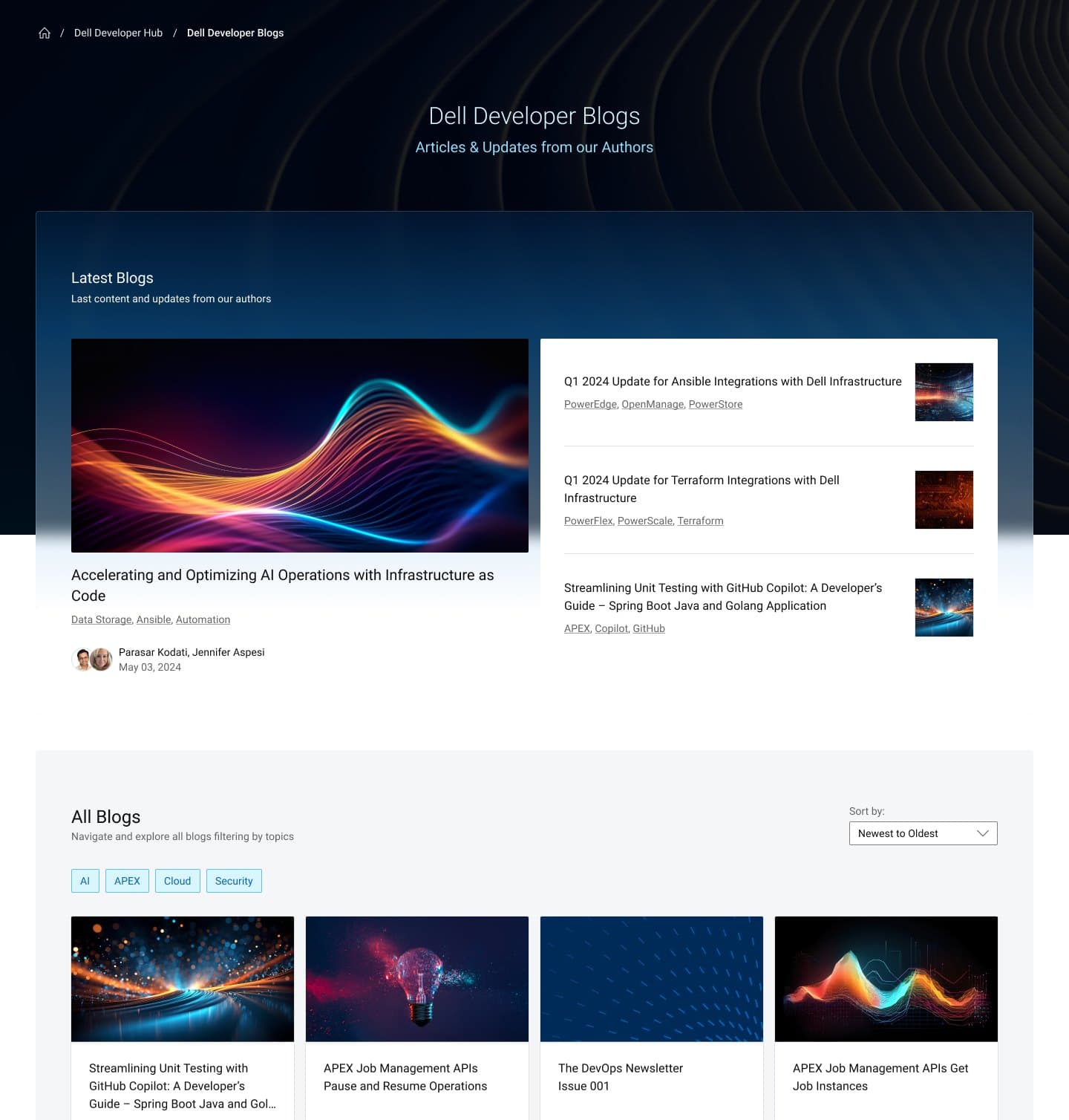
The mandate went beyond one portal: establish the communication standard Dell wanted every developer-facing property to follow. We built the hub as that model, on a concise architecture and foundation grounded in Dell's existing design system.
The first plan was to pull all the content from the other portals into ours. Research showed real resistance: each team wanted to keep its own entry point. It took sustained dialogue, showing what a unified experience and structure meant for them too, before the approach was accepted.
Five months after the team was fully staffed, we shipped the first version. From there, other teams could plug into our centralised search to surface their own content and resources in one place.
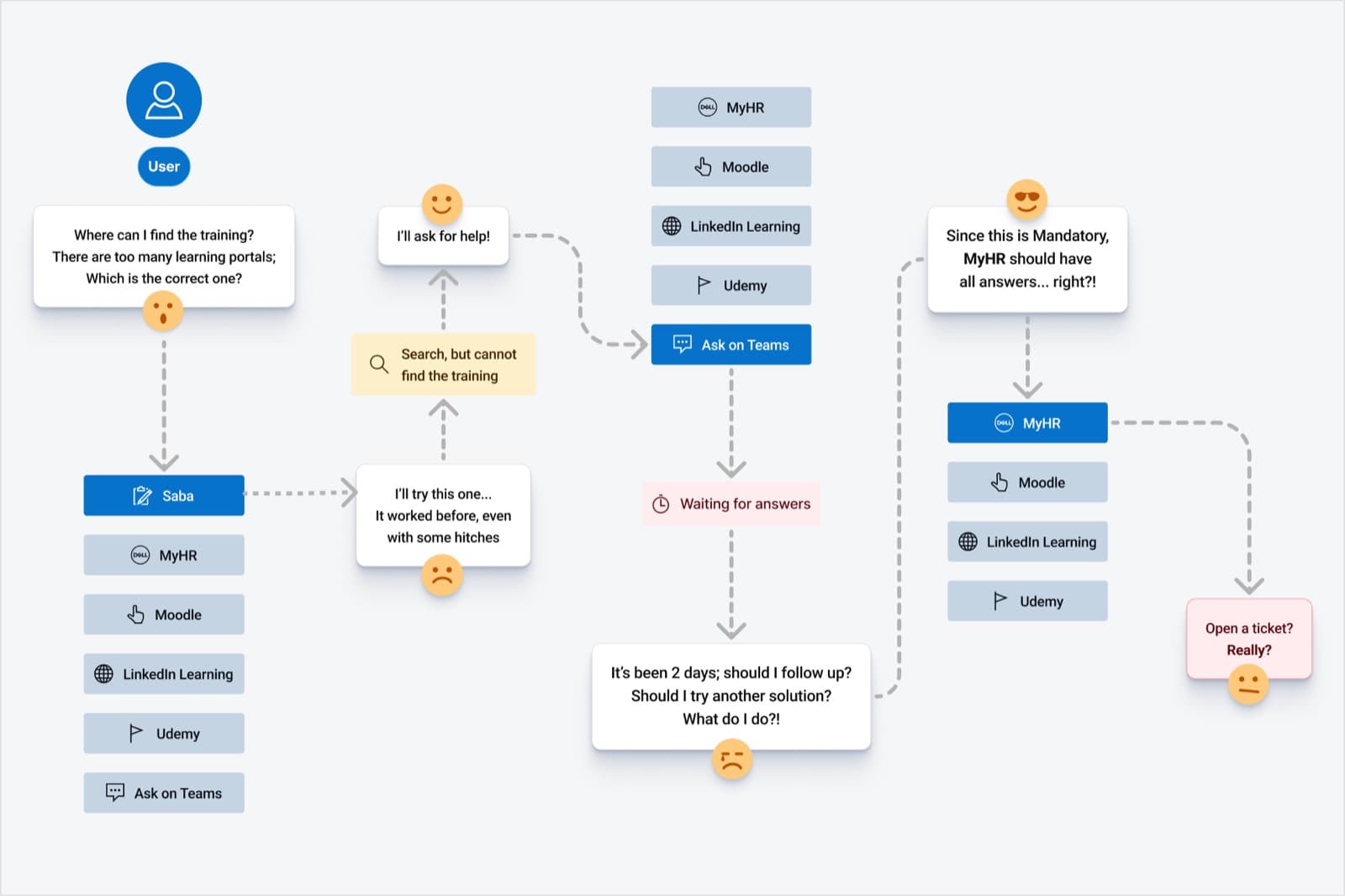
Inconsistent patterns hurt credibility and slowed delivery: every new page reopened settled questions the system should have already answered.
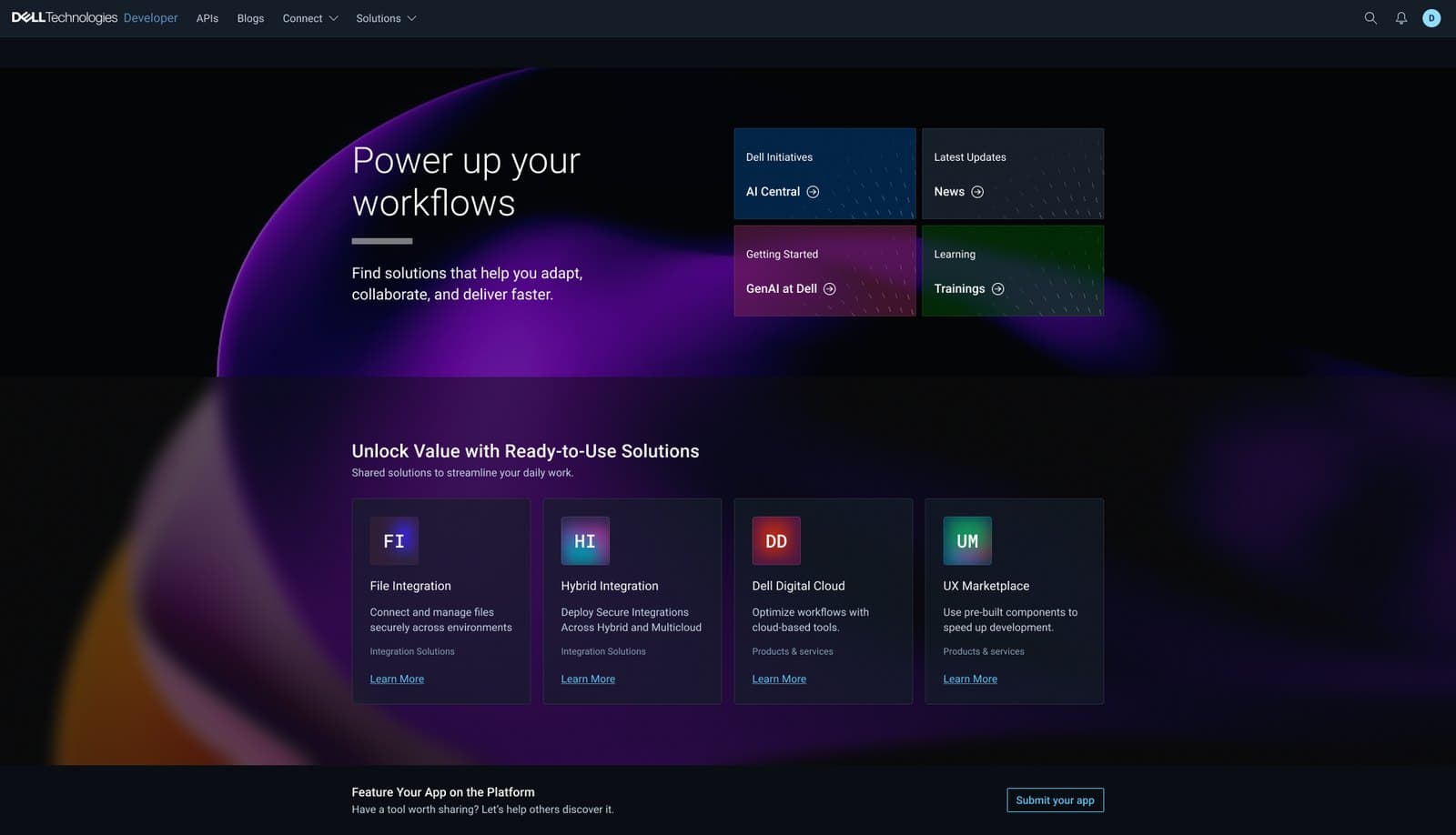
Rather than build our own components, we worked directly with the design system team to refine some of the existing ones. We also proposed dark mode: our research showed it would raise satisfaction for developers who spend long sessions reading documentation.
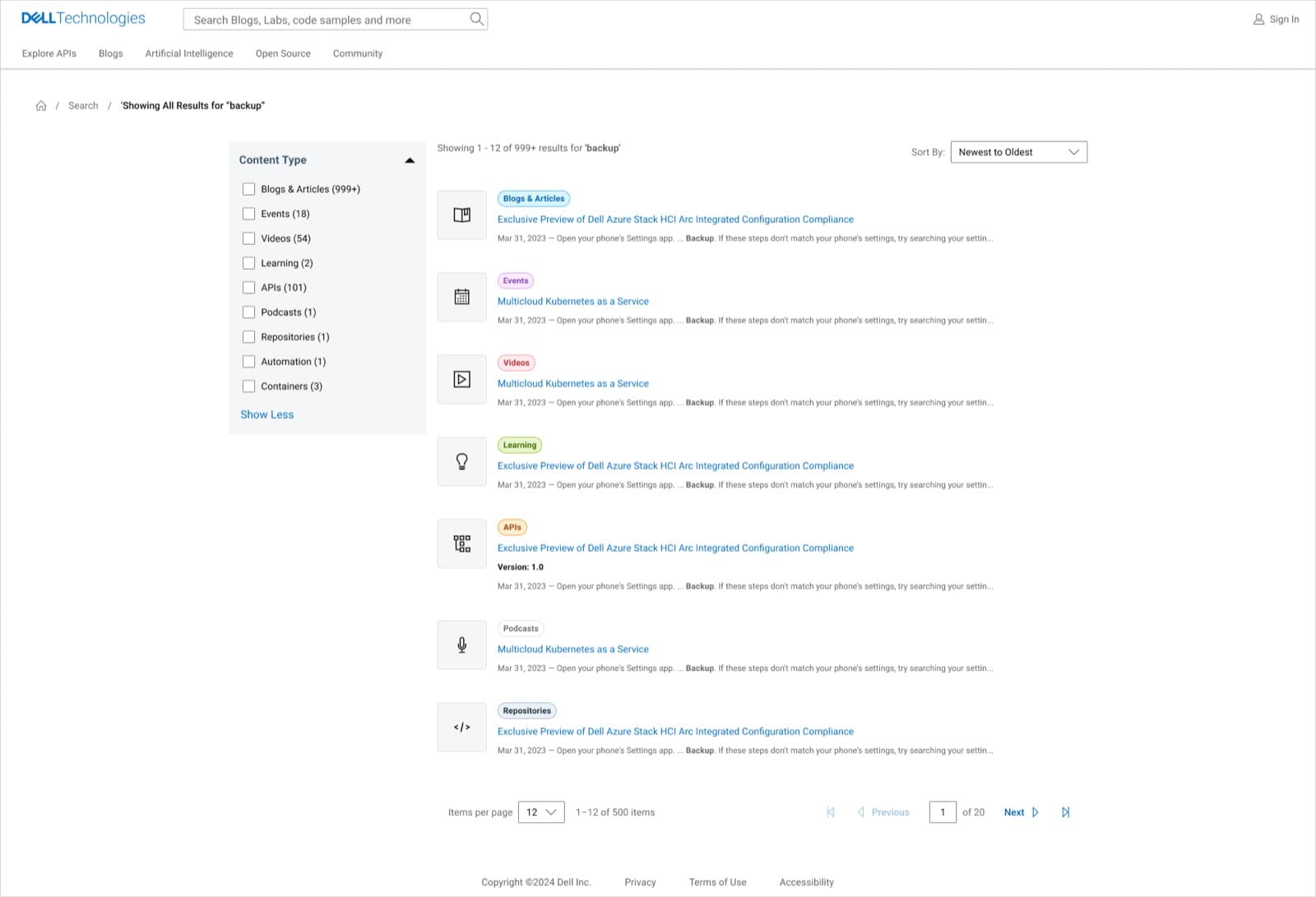
Developers arrived with a task, not with Dell product names, so results mixed blogs, APIs, events and repositories with no way to tell them apart.
Interviews showed the same name could mean different things depending on context: a search for a product could return a blog post, an API reference and an event with the same title. We chose to categorise every result and make its content type visually explicit, so people could tell them apart before opening one.
+11%
Unique users, 2023 to 2024
+6%
Total users, 2023 to 2024
8k
Peak daily visits
The Developer Hub transformed the developer experience: total users grew 6% and unique users 11% between 2023 and 2024, with a peak of 8,000 accesses in a single day.
I would go straight to proposing the information architecture and a unified experience, instead of first trying to pull every team's content into our portal. It took months of research to understand why teams resisted; starting from the unification proposal would have saved that time.